For In-N-Out Associates: Turn Feedback Into a Better Next Attempt
A correction becomes useful when you can name the change, try it, and check whether it solved the actual problem.
Read the full guideIn-N-Out associate work / transferable skills
Work-learning guides for In-N-Out associates, with practical ways to ask, practice, check and coordinate. Independent editorial methods, grounded in public sources.
Start with a recurring challenge. Each long-form guide turns an abstract skill into a concrete preparation method.
A correction becomes useful when you can name the change, try it, and check whether it solved the actual problem.
Read the full guideFind the one missing detail that changes your next action, then check it without turning a task question into a long interview.
Read the full guideA practical way to improve rhythm without skipping a check, copying an unsafe shortcut, or treating visible busyness as progress.
Read the full guideLearn to distinguish saying something aloud from completing a usable transfer of work.
Read the full guideLearning Prompt Builder
Choose a learning situation and a moment in the process. Build a short, practical prompt for a conversation with an authorized trainer or lead.
Useful output: A one-attempt learning plan with a check you can discuss.
Scope limit: Use current employer instructions and authorized training. This prompt grants no task permission and does not replace urgent safety reporting.
Useful output: A short assignment recap with one unresolved question.
Scope limit: Use current employer instructions and authorized training. This prompt grants no task permission and does not replace urgent safety reporting.
Useful output: A practice comparison that includes both pace and accuracy.
Scope limit: Use current employer instructions and authorized training. This prompt grants no task permission and does not replace urgent safety reporting.
Useful output: A concise handoff that makes status and ownership clear.
Scope limit: Use current employer instructions and authorized training. This prompt grants no task permission and does not replace urgent safety reporting.
Useful output: One clear clarification request to the authorized lead.
Scope limit: Use current employer instructions and authorized training. This prompt grants no task permission and does not replace urgent safety reporting.
Useful output: A factual update with a specific request.
Scope limit: Use current employer instructions and authorized training. This prompt grants no task permission and does not replace urgent safety reporting.
Useful output: A precise question that another person can answer.
Scope limit: Use current employer instructions and authorized training. This prompt grants no task permission and does not replace urgent safety reporting.
Useful output: A private, minimal learning note you can use to prepare a question.
Scope limit: Use current employer instructions and authorized training. This prompt grants no task permission and does not replace urgent safety reporting.
Fixed public-source reading aid, checked October 4, 2026. Choices exist only in this page’s memory. No tool storage, cookies, uploads, URL parameters or network requests. Your browser may restore form state independently. Never enter private records or credentials.
An original visual explanation
A learning note is useful when it captures the question, the authorized guidance and the next observation. It should never become a private collection of coworker, customer or employer records.
Read the guide behind the diagram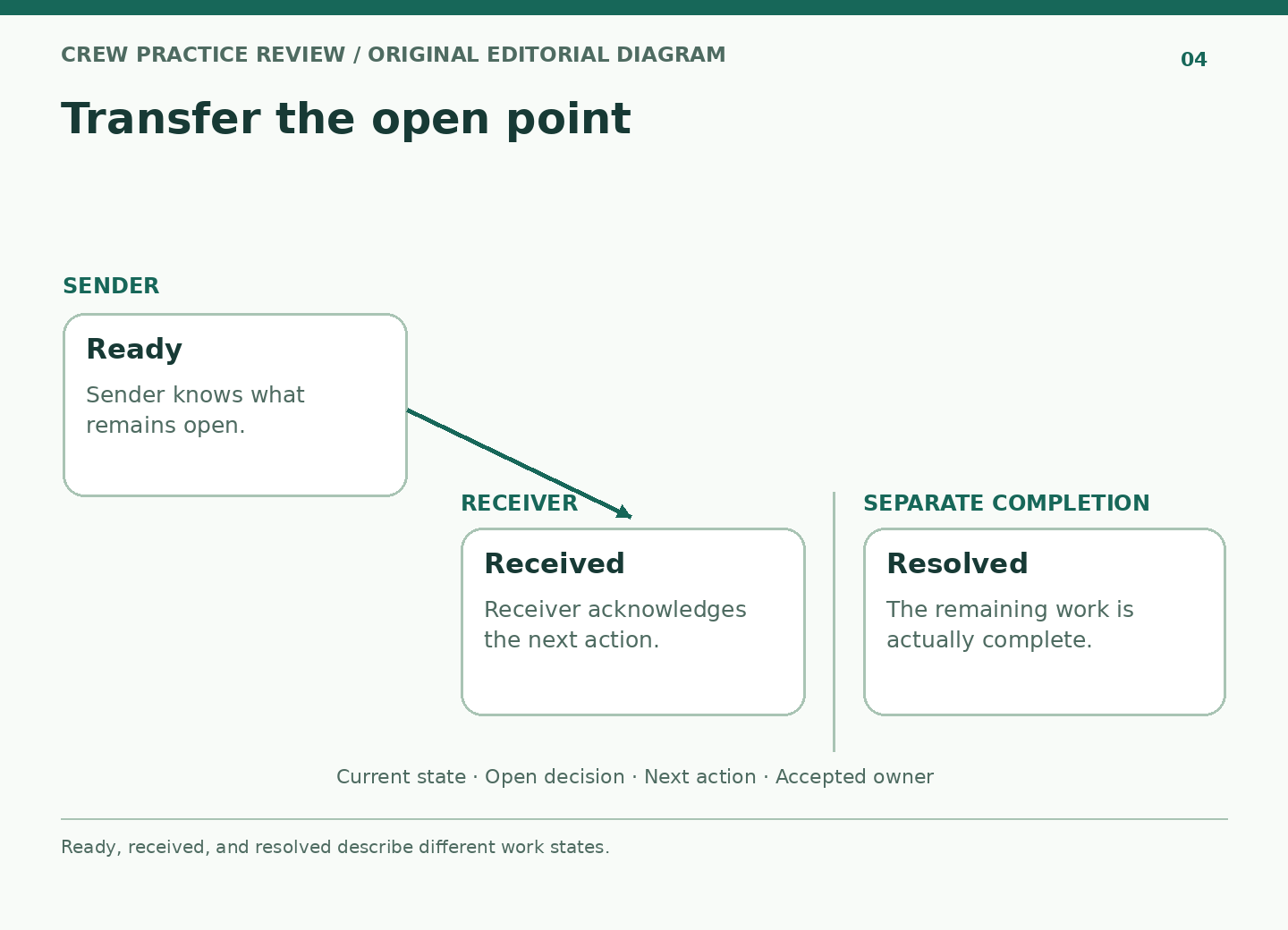
Browse by the work question you need to answer. The full directory remains readable when JavaScript is unavailable.
18 articles
LEARN
A correction becomes useful when you can name the change, try it, and check whether it solved the actual problem.
Read the article : For In-N-Out Associates: Turn Feedback Into a Better Next AttemptCOORDINATE
Find the one missing detail that changes your next action, then check it without turning a task question into a long interview.
Read the article : Clarify the Assignment Before You Commit to the MethodJUDGMENT
A practical way to improve rhythm without skipping a check, copying an unsafe shortcut, or treating visible busyness as progress.
Read the article : Build Pace Around the Checks That Protect the WorkCOORDINATE
Learn to distinguish saying something aloud from completing a usable transfer of work.
Read the article : A Handoff Is Finished When Responsibility Is ClearCOORDINATE
Separate a changed instruction from a genuine conflict, then ask the person responsible to resolve the decision.
Read the article : When Two Directions Do Not Fit TogetherCOORDINATE
Replace vague progress language with a short report that makes the next action visible.
Read the article : Give a Status Update That Helps Someone DecideJUDGMENT
You can describe what you observed and ask for help without proving the cause or improvising the remedy.
Read the article : Raise a Concern Before You Have a Perfect ExplanationLEARN
Move beyond “Am I doing okay?” by asking about the point where your next decision becomes uncertain.
Read the article : Ask a Training Question That Changes the Next AttemptLEARN
A small learning record should improve your next question, not become a second job or an unofficial workplace archive.
Read the article : Keep a Learning Log That You Will Actually UseJUDGMENT
Repeated corrections are easier to address when you identify the point where the work first went off track.
Read the article : Find the Pattern Behind Work You Have to RepeatSERVICE
Small service choices can reduce confusion while preserving the guest’s agency and the limits of your role.
Read the article : Make the Conversation Easier to UseSERVICE
You can take a concern seriously while being precise about the decision you can and cannot make.
Read the article : Respond to a Complaint Without Promising the RemedyCOORDINATE
The safest memory aid is a clear work state, not confidence that you probably remember where you stopped.
Read the article : Return to an Interrupted Task Without Guessing Your PlaceCOORDINATE
Close the communication loop before a transition, and keep your personal reflection separate from the operational record.
Read the article : Leave the Next Person a Clear Starting PointCOORDINATE
A capacity request names the collision and asks for a decision instead of silently accepting incompatible demands.
Read the article : Ask for a Priority Decision Before Work Becomes InvisibleLEARN
Some skills can be rehearsed on paper; live tasks need the right instruction, permission and conditions.
Read the article : Practice the Judgment Without Inventing the ProcedureLEARN
A clear repeat-back checks meaning; it does not replace supervised demonstration or permission to perform the task.
Read the article : Explain What You Understood Without Claiming You Are ReadyJUDGMENT
Carry the reasoning forward while checking the new context, authority and method instead of assuming the whole procedure transfers.
Read the article : Recognize the Skill You Can Carry to the Next AssignmentWe separate what a public employer page actually establishes from what an example merely illustrates. The collection concentrates on feedback, task clarity, pacing, handoffs and coordination. It does not assign internal levels, certify proficiency, set performance targets or prescribe equipment and food-handling procedures.
This publication is independent of In-N-Out Burger. We do not collect applications or credentials, access associate accounts, or provide employer support.